About
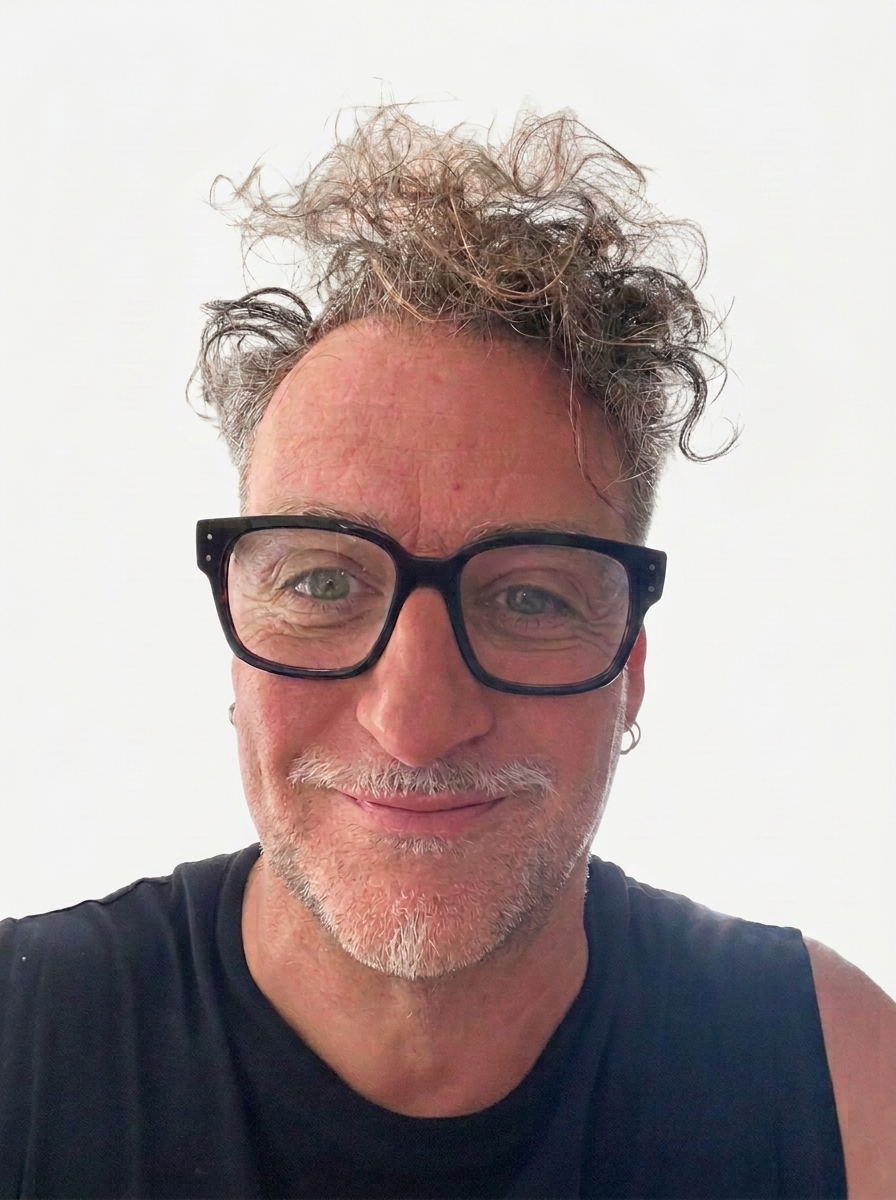
Rémi Coignard-Friedman
A researcher first. A methodologist and qualitative analysis expert, for twenty-five years I have worked with qualitative material — interviews, focus groups, observation — and I teach its analysis to those confronting it for the first time and to those who need to deepen their understanding and their skills.
A certified NVivo trainer (Lumivero), I work with proprietary software and open-source alternatives alike, because the right tool depends on the project, not the catalogue. My work is split between Europe and Canada. Added to that are collaborations with West Africa — notably Université Cheikh Anta Diop in Dakar —, Madagascar, Mayotte, French Polynesia and Costa Rica. So many crossings between vocabularies and research traditions that constantly need translating.
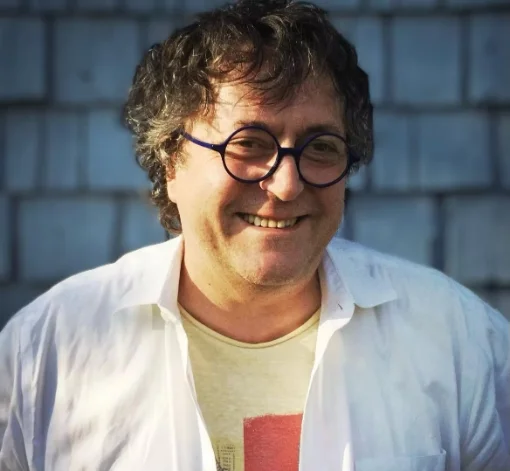
I am also a maker. As a sociographer, I join the sociological eye to photography and video: another language for telling and showing social realities, with a wider aim and a broader audience than journals reach. Photographs, videos, photo essays, a blog, interviews — these are the forms the work takes. The images on this site are mine.
Career
From fieldwork to teaching
I teach nothing I have not practised. Every part of what I offer comes from a specific moment in this path — interviewing learned on difficult ground, coding tested on corpora running to hundreds of pages, epistemology worked through in a dissertation and then retested in research teams.
Paris: psychology, then sociology
Two bachelor’s degrees — psychology at Paris V, sociology at Paris VII — then a master’s and a DEA in sociology, the latter split between Paris VII and the Université de Montréal. That DEA is what brought me to Quebec in 1995.
What it feeds today — the attention paid to epistemology, before any choice of method.First fieldwork: interviewing as a craft
CIRST at UQAM on student pathways, an INSPQ survey on smoking in Quebec schools, then coordinating fieldwork across Quebec for the research group “Medication as a social and cultural object” at the Université de Montréal, under Johanne Collin and Marcelo Otero. Interviews, focus groups, analysis in Nudist — and the conviction that a guide is judged by what it lets you analyze six months later.
What it feeds today — the training on one-on-one interviews and focus groups.Eleven years in clinical and primary care research
Oncology and lung-cancer follow-up with Éveline Hudon and Michelle Aubin (Universités de Montréal and Laval) — some fifty interviews and a paper in the CMAJ; palliative care with Serge Daneault; six years in the Department of Family Medicine at Université Laval; then, at the CR CHUM, bullying in surgery and distress screening.
What it feeds today — supporting teams, from study design to findings.Doctorate in sociology, UQAM
Dissertation accepted under the supervision of Marcelo Otero. A qualitative study carried out end to end: constructing the object, the corpus, thematic then analytical analysis, and explicit work on the assumptions behind the approach.
What it feeds today — thesis and dissertation supervision, from the research question to the findings.CRIUGM, then CRISM–CRCHUM
Cognitive ageing and co-design workshops at the CRIUGM; then leading the qualitative work of Dr Julie Bruneau’s laboratory at the CRCHUM, CURMA team — HepCO Aging, HepCO Pain, CUSHIP, TAOI. I also teach qualitative analysis at UQAM, at graduate level. Research with people who use drugs, training new staff, and organizing the 2024 ACFAS symposium on interviewing vulnerable populations.
What it feeds today — work on sensitive fieldwork and inter-rater agreement.End of life at home: Montreal and Paris
At the CREGÉS and the Université de Montréal, the project “Home until the end?” led by Isabelle Van Pevenage (SSHRC Insight): fifteen triads of older person / family member / care worker, some forty interviews. In parallel, co-investigator at the GHU AP-HP and Université Paris-Saclay on decision pathways around dying at home.
What it feeds today — an active research practice, in France and Quebec.Teaching, all along
Teaching did not come after the research: it has run alongside it for twenty-five years. A certified NVivo trainer, in 2024 I took over the practice Didier Dupont founded and widened it — open-source tools, data collection as much as analysis, the writing of findings. In May 2026, a paper at the LibreQDA symposium at the Université de Sherbrooke on the tool in the service of interpretation.
What it feeds today — everything described on this site.Publications
Selected publications
Peer-reviewed articles, book chapters and conference papers. The full list is available on request.
Journal articles
- Høj, S. B., Coignard-Friedman, R., Sako, A., & Bruneau, J. (2024). Harnessing telemedicine to deliver patient-centered care for opioid use disorder within a community-based harm reduction service: a mixed methods evaluation. International Journal of Drug Policy.
- Daneault, S., et al. (2016). Ultimate journey of the terminally ill: ways and pathways of hope. Canadian Family Physician.
- Hudon, É., Coignard-Friedman, R., et al. (2009). Le rôle du médecin de famille dans le suivi des patients atteints de cancer du poumon. CMAJ.
- Hudon, É., Coignard-Friedman, R., Aubin, M., et al. (2008). Interprofessional collaboration in the follow-up of patients with lung cancer. Journal of Palliative Care, 24(3), 198.
- Coignard-Friedman, R. (2005). De la difficulté d’être soi. Cahiers de recherche sociologique, 41-42, 291-294.
Book chapters
- Leibing, A., & Coignard-Friedman, R. (2006). Mémoire défaillante : utilisation de médicaments et reclassification de la maladie d’Alzheimer. In Collin, Otero & Monnais (eds.), Le médicament : vecteur de socialité. Presses de l’Université du Québec.
- Coignard-Friedman, R. (2008). Représentations de l’automobile, covoiturage et individualité contemporaine. In Vincent, Rocca & Clochard (eds.), Auto mobilité et alter mobilités. L’Harmattan.
Conference papers
- Coignard-Friedman, R. (2026). L’outil au service de l’interprétation : penser, cadrer et accompagner l’analyse qualitative assistée par ordinateur. Colloque LibreQDA, Université de Sherbrooke, 24-25 mai 2026.
- Coignard-Friedman, R. (2024). Organizer and chair of the ACFAS symposium L’entrevue de recherche avec des populations fragilisées : enjeux, limites et défis.
- Meloche-Dumas, L., et al. (2019). Intimidation en chirurgie : perceptions divergentes entre les étudiants en médecine et les autres membres de l’équipe chirurgicale. 8e Forum international francophone de pédagogie des sciences de la santé.
Full list and PDFs on request — write to me.
Tribute
What I owe Didier Dupont
1995 — 29 September 2024. My closest friend.
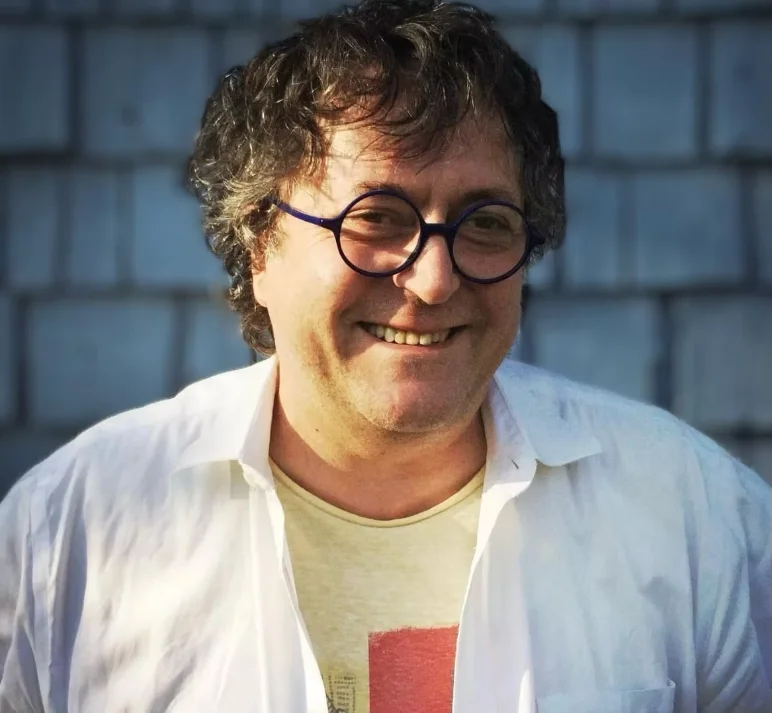
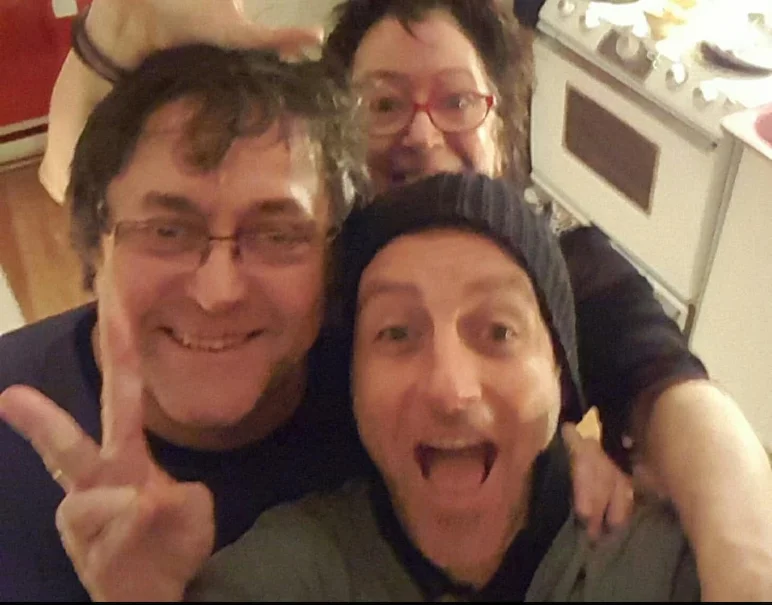
We met in 1995, when I arrived in Quebec, in a course on the sociology of symbolic systems taught by Professor Luc Racine — who would later become my dissertation supervisor. Our friendship began that year and never stopped growing.
Didier was a born teacher: quick-witted, with a great sense of humour and a boundless passion for research. Generous, warm. A certified NVivo expert with twenty years of experience, he trained across the French-speaking world — training, consulting, tutoring, qualitative research projects and programme evaluations, in collaboration with universities and government bodies. Many of the people reading this page learned to code with him.
It was in those exchanges that my way of looking at the social took shape.
I owe him a great deal — as a person, as a teacher, and far beyond that.
His expertise
He knew the software better than anyone, but his real subject lay elsewhere: the work of thematization, inter-rater validation, the move to producing findings. He taught me that NVivo is never the question — only a way of making reasoning visible.
His trust
Nearly thirty years of friendship, and a practice built over twenty years that he let me carry on. He did it without reservation, and without ever asking me to do it his way.
His mark
Rigour without jargon, the habit of starting from participants’ real data rather than a practice set, and a refusal to sell a technical solution to a problem of method. That is what remains in every session I teach.
Didier died on 29 September 2024. With the agreement of his partner, Sylvie Lupien, I decided to carry the torch: out of a wish to continue his work and his mark, and so that his name keeps living. I do it conscious of his legacy and of what he leaves behind. His name remains the address of this site and of my email: it is the simplest way of not letting him disappear. What continues: his teaching, his long-term mentoring, his readiness to help in an emergency. What widens: open-source software, work on data collection as much as analysis, and the writing of findings.
Written the day after he died, 30 September 2024
My friend, so dear to my heart and to my soul, Didier Dupont took flight yesterday — gently, at peace.
This man made me the man I am. Through his intelligence, his sensitivity, his love of words and of the arts, his extreme delicacy, generosity, tenderness. I had the joy of sharing so much with him — so many moments, words, laughs, so much music, film, painting, photography, literature, so many writers and artists. Readings, analyses, visions, landscapes and conversations shared around Michel Foucault, Jean Baudrillard, Edgar Morin, Emil Cioran, Louis Calaferte, Guy de Maupassant, and more besides.
Two days ago we said to each other how lucky we had been to find one another and to walk this gentle road of friendship. I never knew what I had come to Quebec looking for, I told him… but I know that this man is what I found. This man who, by who he was, made a man of me — above all through his capacity to live his sensitivity, his wholeness.
I will miss his great enfolding arms, his eloquence, the music of his speech. We are the fruit of the people we meet, of our love stories. That love was, and is, immense.
Adesias my Didier, my Zizier… my didiot.
If you took one of his courses, or if a project was left unfinished with him, write to me. His materials and his follow-up did not vanish with him — I pick up where you left off.